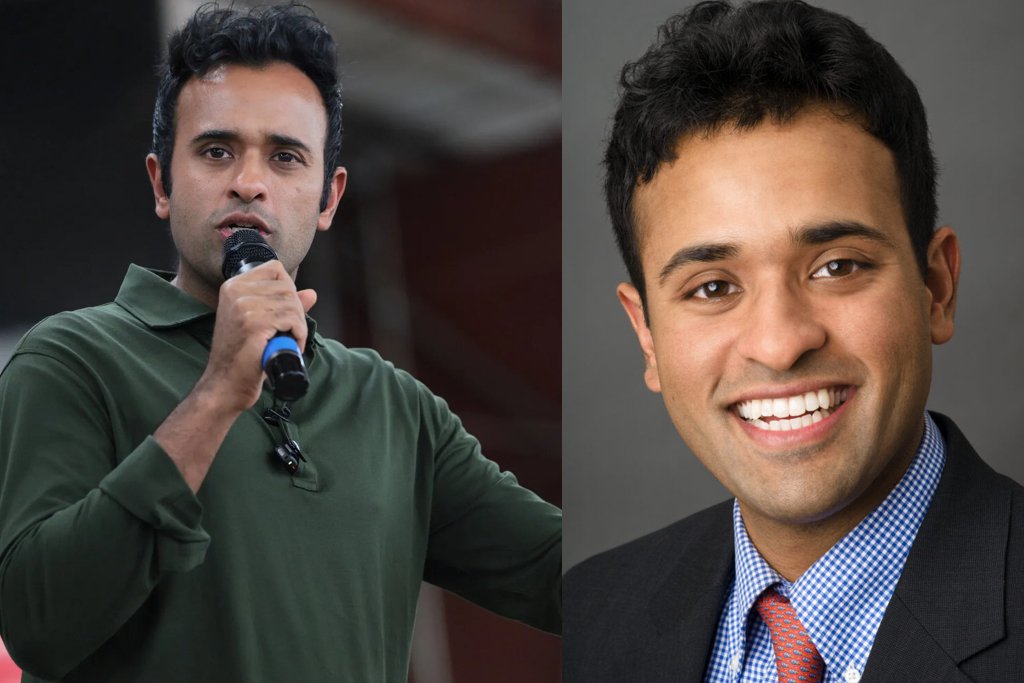
Vivek Ramaswamy had already built a billion-dollar biotechnology fortune before entering presidential politics in 2023. Three years later, he won the Republican nomination for governor of Ohio, the state where he was born. This Vivek Ramaswamy biography follows his unusual journey from a Cincinnati schoolboy to a Harvard and Yale graduate, pharmaceutical entrepreneur, bestselling author and political candidate preparing for the November 3, 2026 election.
His rise has not been without controversy. Ramaswamy attracted national attention through his criticism of corporate diversity programmes and environmental, social and governance investing. His 2024 presidential campaign brought him into debates over immigration, education and the federal government’s powers. After withdrawing from the race, he endorsed Donald Trump and was briefly associated with the proposed Department of Government Efficiency before turning his attention to Ohio.
At 41, Ramaswamy is now competing against Democratic nominee Amy Acton in one of the most closely followed American gubernatorial elections of 2026. Outside politics, he is married to physician Apoorva Tewari Ramaswamy, and they have three children. Their youngest, a daughter named Savithri, was born in February 2026. His business background, family life and latest campaign developments have made him a frequent subject of public interest.
Vivek Ramaswamy Quick Facts
| Detail | Information |
|---|---|
| Full name | Vivek Ganapathy Ramaswamy |
| Date of birth | August 9, 1985 |
| Age | 41 years old (October 2026) |
| Birthplace | Cincinnati, Ohio, United States |
| Nationality | American |
| Family background | Indian-American; parents immigrated from Kerala |
| Profession | Entrepreneur, author and politician |
| Political party | Republican Party |
| Current political role | Republican nominee for Ohio governor |
| Father | V. G. Ramaswamy |
| Mother | Geetha Ramaswamy |
| Education | Harvard University and Yale Law School |
| Wife | Dr. Apoorva Tewari Ramaswamy |
| Marriage date | May 31, 2015 |
| Children | Three: Karthik, Arjun and Savithri |
| Known businesses | Roivant Sciences and Strive Asset Management |
| First book | Woke, Inc. (2021) |
| Estimated net worth | $2.2 billion, Forbes estimate dated October 21, 2026 |
| Campaign website | vivekforohio.com |
Early Life and Family Background
Vivek Ganapathy Ramaswamy was born on August 9, 1985, in Cincinnati, Ohio.
His parents immigrated to the United States from Kerala, a state in southern India. They settled in Ohio, where they built professional careers and raised their family.
His father, V. G. Ramaswamy, worked as an engineer for General Electric. His mother, Geetha Ramaswamy, trained as a physician and worked in geriatric psychiatry.
Ramaswamy grew up in the Cincinnati area and maintained connections with his family’s Indian background. He has spoken publicly about being raised in a Hindu household and spending time with relatives in India.
As a child, he developed an interest in academics, music and competitive sports.
He studied classical piano and became a nationally ranked junior tennis player while attending school.
His academic performance eventually earned him a place at Harvard University, where he began developing the interests in science and business that shaped his early career.
His upbringing and educational background are documented by the Paul & Daisy Soros Fellowships for New Americans.
Vivek Ramaswamy’s Education
Ramaswamy attended St. Xavier High School in Cincinnati, a private Jesuit secondary school.
He graduated as the school’s valedictorian before enrolling at Harvard University.
Harvard University
Ramaswamy graduated from Harvard College in 2007 with a Bachelor of Arts degree in biology.
He graduated summa cum laude and was elected to Phi Beta Kappa, an academic honour society.
His undergraduate research examined scientific and ethical questions involving the creation of human-animal chimeras.
Beyond science, he participated in campus political discussions and student organisations. He also developed an early interest in entrepreneurship.
Yale Law School
After working in finance, Ramaswamy enrolled at Yale Law School.
In 2011, he received a Paul & Daisy Soros Fellowship for New Americans to support his legal education.
He completed his Juris Doctor degree in 2013.
Although he studied law, his primary professional career developed in investment management, biotechnology and business rather than courtroom legal practice.
How Vivek Ramaswamy Started His Business Career
Ramaswamy began working in finance after graduating from Harvard.
He joined QVT Financial, an investment firm where he specialised in biotechnology and pharmaceutical companies.
His work involved examining drug-development businesses and evaluating whether pharmaceutical products could become commercially successful.
That experience exposed him to companies developing experimental treatments and helped him identify opportunities in medicines that larger pharmaceutical businesses had stopped prioritising.
Ramaswamy later used that approach to establish his own biotechnology company.
Founding Roivant Sciences
In 2014, Vivek Ramaswamy founded Roivant Sciences, a biotechnology company focused on developing pharmaceutical products.
Its business model involved acquiring or licensing drug candidates, including treatments that other pharmaceutical companies had stopped developing.
Roivant then organised individual development businesses, sometimes called Vants, around particular medicines or therapeutic areas.
The model attracted significant investor interest.
Over time, Roivant expanded into several areas of medical research, including autoimmune diseases and other conditions requiring new treatments.
Ramaswamy served as the company’s chief executive until 2021, when he stepped away from day-to-day leadership.
His role in founding and building Roivant became the primary source of his early business wealth.
Forbes’ business profile documents his involvement with Roivant and the financial investments associated with his fortune.
The Axovant Alzheimer’s Drug Controversy
One of Roivant’s early pharmaceutical ventures became controversial after an experimental Alzheimer’s treatment failed a major clinical trial.
In 2014, a Roivant subsidiary acquired the rights to intepirdine, an investigational drug, from GlaxoSmithKline.
The drug was developed through Axovant Sciences, which went public in 2015 and raised substantial investment.
Ramaswamy publicly discussed its potential as a treatment for Alzheimer’s disease.
However, a major Phase 3 clinical trial failed in September 2017, and Axovant’s share price fell sharply.
The failure prompted scrutiny of the company’s earlier claims and the information available to investors.
During the 2026 Ohio governor campaign, Democratic nominee Amy Acton accused Ramaswamy of knowingly promoting an ineffective drug for personal financial gain.
An October 12, 2026, PolitiFact investigation found that earlier studies had produced mixed or unsuccessful results and that Ramaswamy had promoted the drug’s prospects.
However, the investigation also found that the available evidence did not establish that he knew the treatment would fail or deliberately defrauded investors.
The drug’s clinical failure is documented, but an allegation of deliberate fraud should not be presented as an established fact.
Strive Asset Management and His Business Philosophy
Ramaswamy expanded into another financial venture in 2022, when he co-founded Strive Asset Management.
Strive was established as an alternative to investment firms that promote environmental, social and governance considerations in corporate decision-making.
Ramaswamy argued that investment managers should focus primarily on financial returns and avoid using shareholders’ money to advance political or social objectives without their consent.
His criticism was directed at aspects of ESG investing and large asset-management companies.
Critics of his approach argued that environmental risks, corporate governance and other nonfinancial considerations can also affect long-term investment performance.
These disagreements formed part of a wider debate about the responsibilities of corporations and investment managers.
Ramaswamy’s involvement with Strive helped develop the public arguments he later used in his political campaigns.
Vivek Ramaswamy’s Books
Before seeking political office, Ramaswamy developed a public profile as an author and commentator.
His books examine business, American identity, corporate influence and his political beliefs.
| Year | Book | Main subject |
|---|---|---|
| 2021 | Woke, Inc.: Inside Corporate America’s Social Justice Scam | Criticism of corporate activism and stakeholder capitalism |
| 2022 | Nation of Victims | American identity, merit and political culture |
| 2023 | Capitalist Punishment | Criticism of political influence through financial institutions |
| 2024 | Truths: The Future of America First | His political vision and conservative policy arguments |
His first book, Woke, Inc., became particularly important to his public career.
It argued that large corporations were increasingly using social and political campaigns in ways he believed undermined democratic accountability.
Those arguments attracted supporters who shared his concerns about corporate activism, while other commentators challenged his conclusions.
The books helped establish Ramaswamy as a recognisable political voice before he announced his presidential campaign.
His published works are listed in his Simon & Schuster author profile.
Vivek Ramaswamy’s 2024 Presidential Campaign
Ramaswamy entered national electoral politics on February 21, 2023, when he announced his campaign for the 2024 Republican presidential nomination.
At the time, he had never held elected public office.
His campaign focused on reducing the size of the federal government, changing education policy, opposing affirmative action and challenging what he described as excessive influence from administrative agencies.
He also proposed major changes to immigration policy and federal employment.
Ramaswamy participated in Republican presidential debates and attracted attention for his confrontational exchanges with other candidates.
He frequently praised Donald Trump’s presidency while arguing that a younger generation should continue elements of Trump’s political agenda.
His campaign gained considerable media attention, but it did not produce a victory in the Republican primaries.
Why Did Vivek Ramaswamy Drop Out of the Presidential Race?
On January 15, 2024, Ramaswamy suspended his presidential campaign after finishing fourth in the Iowa Republican caucuses.
He acknowledged that the election results did not provide a viable path to winning the Republican nomination.
Shortly after withdrawing, he endorsed Donald Trump.
The decision ended his first campaign for elected office but kept him involved in national Republican politics.
The Associated Press documented his withdrawal and endorsement on January 15, 2024.
His Involvement with Elon Musk and DOGE
After Donald Trump’s victory in the November 2024 presidential election, Ramaswamy was selected to help lead a proposed government-efficiency initiative alongside billionaire entrepreneur Elon Musk.
The initiative became known as the Department of Government Efficiency, or DOGE.
Its announced purpose was to examine federal spending, regulation and bureaucracy and recommend changes intended to improve government efficiency.
However, Ramaswamy did not remain involved after Trump’s inauguration.
He left the initiative in January 2025 as he prepared to seek the Ohio governorship.
Reports also described differences in approach between Ramaswamy and Musk, although the precise role of those disagreements in his departure was disputed.
Reuters’ January 2025 reporting confirmed that Ramaswamy would not join the government’s DOGE initiative.
His association with DOGE was therefore brief. It should not be confused with a long period of service in a formal federal office.
Vivek Ramaswamy’s 2026 Ohio Governor Campaign
Ramaswamy officially launched his campaign for governor of Ohio on February 24, 2025.
He presented himself as a businessman seeking to change the state’s approach to taxes, government spending, education and economic development.
Donald Trump endorsed his candidacy, and Ramaswamy also received support from several prominent Ohio Republicans.
On January 7, 2026, he selected Ohio Senate President Rob McColley as his running mate for lieutenant governor.
In the May 5, 2026, Republican primary, Ramaswamy defeated his remaining opponents and secured the party’s nomination.
The results were confirmed by WOSU Public Media’s election coverage.
His Democratic opponent is Amy Acton, a physician and former director of the Ohio Department of Health.
Ohio’s gubernatorial election is scheduled for November 3, 2026.
Who Is Running Against Vivek Ramaswamy?
The official 2026 Ohio governor ballot includes three party tickets, alongside a write-in option.
| Party | Governor candidate | Lieutenant governor candidate |
|---|---|---|
| Republican | Vivek Ramaswamy | Robert A. McColley |
| Democratic | Amy Acton | David Pepper |
| Libertarian | Don Kissick | James L. Mills |
The candidates and their running mates appear on Ohio’s official November 3, 2026 election ballot.
Vivek Ramaswamy’s Political Plans for Ohio
Ramaswamy’s campaign has outlined several proposals focused on taxes, economic activity, education and public services.
According to his official campaign policy document, his principal proposals include:
- Tax reductions: Rolling back property taxes and pursuing the gradual elimination of Ohio’s state income tax.
- Energy policy: Expanding energy production and seeking to reduce electricity costs.
- Education: Expanding educational options and increasing parental involvement in school decisions.
- Government spending: Reducing bureaucracy and regulatory requirements.
- Public safety: Supporting law enforcement and policies intended to reduce crime.
These proposals reflect his campaign’s stated objectives. They are not policies already implemented by him as governor.
Acton’s campaign has proposed a different approach to tax relief, including targeted credits for working families.
Questions about how large tax reductions would affect funding for schools and local services have become part of the election debate.
The Statehouse News Bureau’s October 21, 2026 report compares the candidates’ tax proposals and their stated approaches to affordability.
Vivek Ramaswamy’s Latest News in October 2026
With Ohio’s November 3 election approaching, Ramaswamy has faced intensified campaigning, new opinion polls and controversy surrounding an advertisement produced by his campaign.
October 2026 Campaign Advertisement Controversy
On October 20, 2026, Ramaswamy’s campaign confirmed that it produced a political advertisement featuring the estranged mother of Democratic nominee Amy Acton.
The advertisement challenged aspects of Acton’s publicly discussed childhood experiences.
Acton and her brother disputed the statements made in the advertisement. News investigations also examined historical legal records connected with the family circumstances described by Acton.
The advertisement attracted criticism from politicians belonging to both major parties.
Ramaswamy’s campaign defended producing it and announced plans to spend approximately $4 million promoting the message.
On October 21, Vice President JD Vance defended Ramaswamy’s decision to continue airing the advertisement.
The developments were documented by The Associated Press and Reuters.
The advertisement’s disputed allegations are not established facts. The controversy concerns the campaign’s decision to feature those claims and the public response that followed.
What Do the Latest Ohio Governor Polls Show?
Recent opinion polls have reported different levels of support for Ramaswamy and Acton.
A Marist University poll published October 20, 2026, found that 50% of likely Ohio voters supported Acton, while 43% supported Ramaswamy.
The survey was conducted from October 15 to October 18. Its reported margin of sampling error for likely voters was approximately 4.5 percentage points.
Other October polls reported narrower differences, with some placing Ramaswamy slightly ahead.
Polling reflects the preferences of surveyed voters during a particular period. It does not establish the eventual election result.
The Marist survey’s methodology and results are available on the Marist Poll website.
Who Is Vivek Ramaswamy’s Wife?
Vivek Ramaswamy is married to Dr. Apoorva Tewari Ramaswamy, an American physician and surgeon.
Apoorva specialises in disorders and surgical treatment involving the throat, head and neck.
She has worked as a surgeon and academic physician at the Ohio State University Comprehensive Cancer Center, also known as The James.
The couple met in 2011 while studying at Yale University.
Vivek was attending law school, while Apoorva was pursuing medical education.
They developed a relationship and married on May 31, 2015.
During Ramaswamy’s presidential and gubernatorial campaigns, Apoorva has occasionally appeared alongside him at public events.
In a September 2026 interview with WCPO, the couple discussed their marriage, professional responsibilities and raising a family while campaigning.
They live in the greater Columbus area of Ohio.
How Many Children Does Vivek Ramaswamy Have?
Vivek and Apoorva Ramaswamy have three children: two sons and one daughter.
Their sons are named Karthik and Arjun.
On February 4, 2026, the family publicly announced the birth of their third child, a daughter named Savithri.
The couple shared a photograph and a statement confirming the birth.
The announcement was reported by WLWT News in Cincinnati on February 5, 2026.
Savithri’s arrival is an important update because biographies published before February 2026 often list only the couple’s two sons.
The Ramaswamys have discussed balancing parenthood with their professional responsibilities, although their children’s everyday lives are largely kept private.
Is Vivek Ramaswamy Indian or American?
Vivek Ramaswamy is American by birth and has Indian family roots.
He was born in Cincinnati, Ohio, in 1985. His parents immigrated from Kerala, India, before his birth.
His ancestry is therefore Indian, while his nationality and citizenship are American.
Ramaswamy has publicly discussed his family’s Indian background and his upbringing in the United States.
His family history is also documented by the Paul & Daisy Soros Fellowships for New Americans, which recognised him in 2011 as the child of immigrants.
What Is Vivek Ramaswamy’s Net Worth?
According to Forbes, Vivek Ramaswamy’s estimated net worth was $2.2 billion on October 21, 2026.
His wealth comes primarily from investments and business interests associated with biotechnology, particularly Roivant Sciences.
Ramaswamy also became involved in asset management through Strive, although the specific value of each business interest changes over time.
His wealth has fluctuated with changes in the value of his investments and publicly traded companies.
It is important to distinguish an estimated net worth from money held in cash. Most billionaire wealth estimates include business ownership, investments and other assets.
The Forbes figure is therefore an estimate based on available financial information, not an audited statement of his personal bank balance.
His latest publicly listed estimate is available through Forbes.
Where Is Vivek Ramaswamy Now?
As of October 22, 2026, Vivek Ramaswamy is 41 years old and campaigning as the Republican nominee for governor of Ohio.
He is seeking election alongside his running mate, Ohio Senate President Rob McColley.
His Democratic opponent is Amy Acton, with Libertarian candidate Don Kissick also appearing on the ballot.
The election is scheduled for November 3, 2026, and its outcome has not yet been determined.
Outside campaigning, Ramaswamy remains known for founding Roivant Sciences, building a substantial investment fortune and writing books on business and American politics.
He lives with his wife Apoorva and their three children in the greater Columbus area.
His public career now connects several different fields: biotechnology, financial investment, political commentary and electoral politics. The 2026 Ohio governor election is his next major attempt to move from business leadership and national campaigning into elected public office.